Octavius’s Battle with a Bacterial Infection—and His Happy Ending
When one of our fosters noticed something wasn’t right with her axolotl Octavius (affectionately called Tavvy), she trusted her instincts — and it made all the difference.
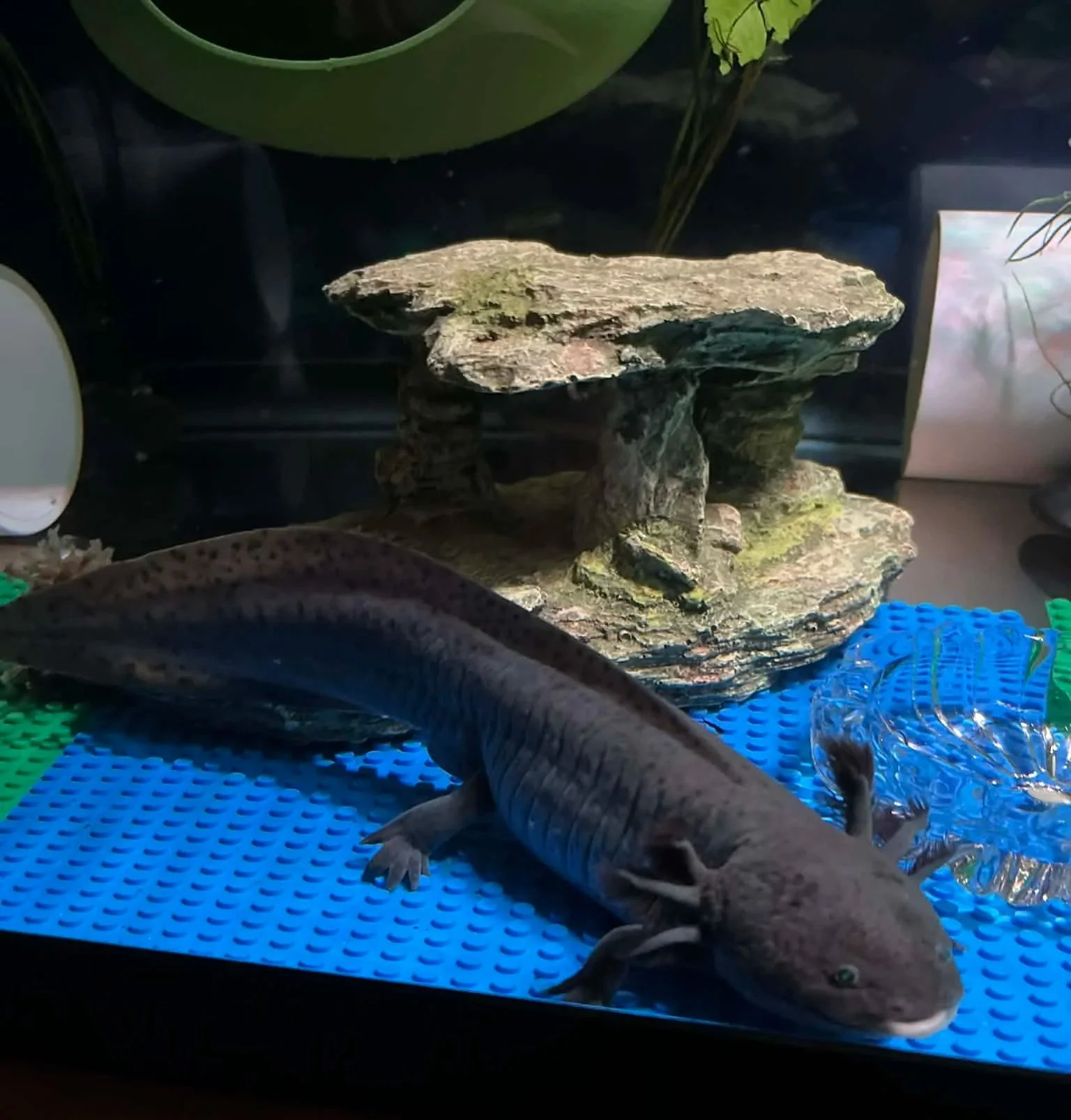
Tavvy had suddenly lost his appetite, his body and limbs were swollen, and even the inside of his mouth looked inflamed. His energy was low, and his behavior was off. The clearest sign came when he snapped at his tank mate — something he had never done before. His foster realized that the swelling and deformation around his mouth were making it hard for him to eat, and his frustration was really just hunger.
A Vet Visit and Diagnosis
Tavvy was quickly taken to an exotic vet, who diagnosed him with a bacterial infection. The prescribed treatment was a topical Baytril solution — an antibiotic that needed to be applied while Tavvy stayed mostly out of the water for about 20 minutes at a time.
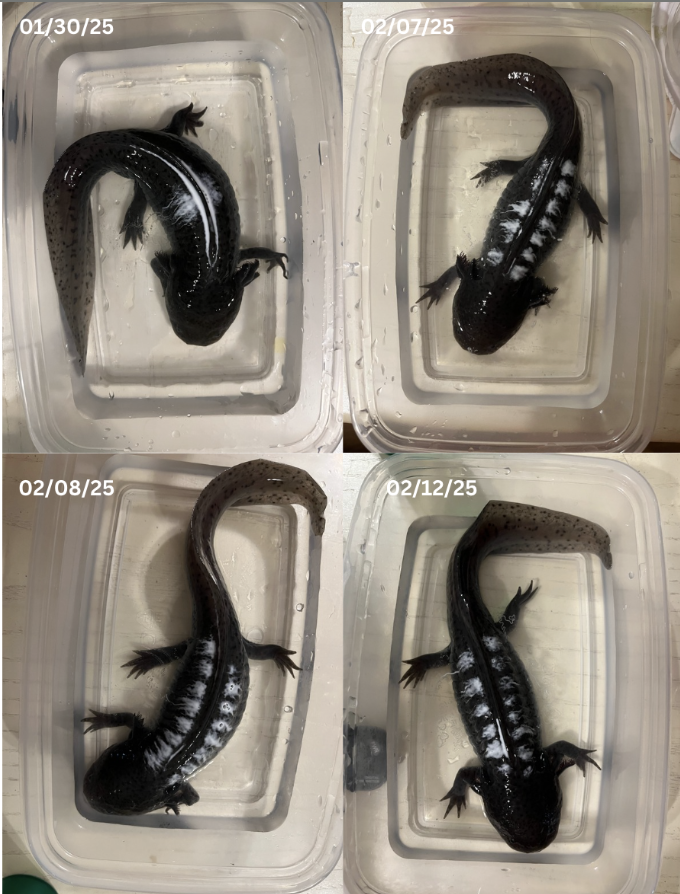
To everyone’s relief, Tavvy was incredibly patient and well-behaved during these sessions. His foster documented the process with photos, showing the swelling gradually decrease over the course of his treatments.
Recovery Week by Week
Week 1: After just a few days of Baytril treatments, the swelling had already gone down significantly. Tavvy looked more comfortable and began showing signs of improvement.
Week 2: By the end of the second week, Tavvy was eating again — a huge milestone in his recovery.
Week 3: He spent one extra week tubbed, just to make sure the infection was fully resolved.
Finally, Tavvy was reintroduced to his brother. The reunion was joyful — the two were clearly excited to see each other again. What began as a frightening infection ended with a heartwarming, happy ending.

Why This Story Matters
Stories like Tavvy’s remind us how important it is to pay close attention to changes in behavior and appearance. Early intervention and veterinary care can save lives, even in exotic pets like axolotls.
At Libertyland Axolotl Rescue, we share these personal experiences not only to celebrate the resilience of our animals, but also to help educate the public. Recognizing symptoms, seeking professional help, and following through with treatment are all critical steps in giving axolotls the best chance at recovery.
