Early‑Phase MBD Project Receives Support from the New England Herpetological Society
Summary: Libertyland Axolotl Rescue has received a $2,000 grant from the New England Herpetological Society (NEHS) to support our early‑phase metabolic bone disease (MBD) project, focused on several of the Cheese Babes already in our care. This phase is exploratory, welfare‑centered, and designed to strengthen our internal understanding of MBD in real rescue conditions.
Why this project matters for axolotl welfare
At Libertyland Axolotl Rescue, our work is shaped by a simple question: what does responsible, evidence‑informed care look like for the animals already depending on us.
MBD in axolotls is complex, often misunderstood, and rarely documented in a structured way outside of veterinary settings. Rescue environments add another layer of challenge: animals arrive with incomplete histories, inconsistent care backgrounds, and a wide range of health concerns. Understanding how MBD presents and progresses in these conditions is essential if we want to build a stronger foundation for future welfare‑centered work.
The New England Herpetological Society, a fellow 501(c)(3) nonprofit with a long history of education, community outreach, and reptile and amphibian adoption, has awarded us a $2,000 grant to support this early‑phase effort.
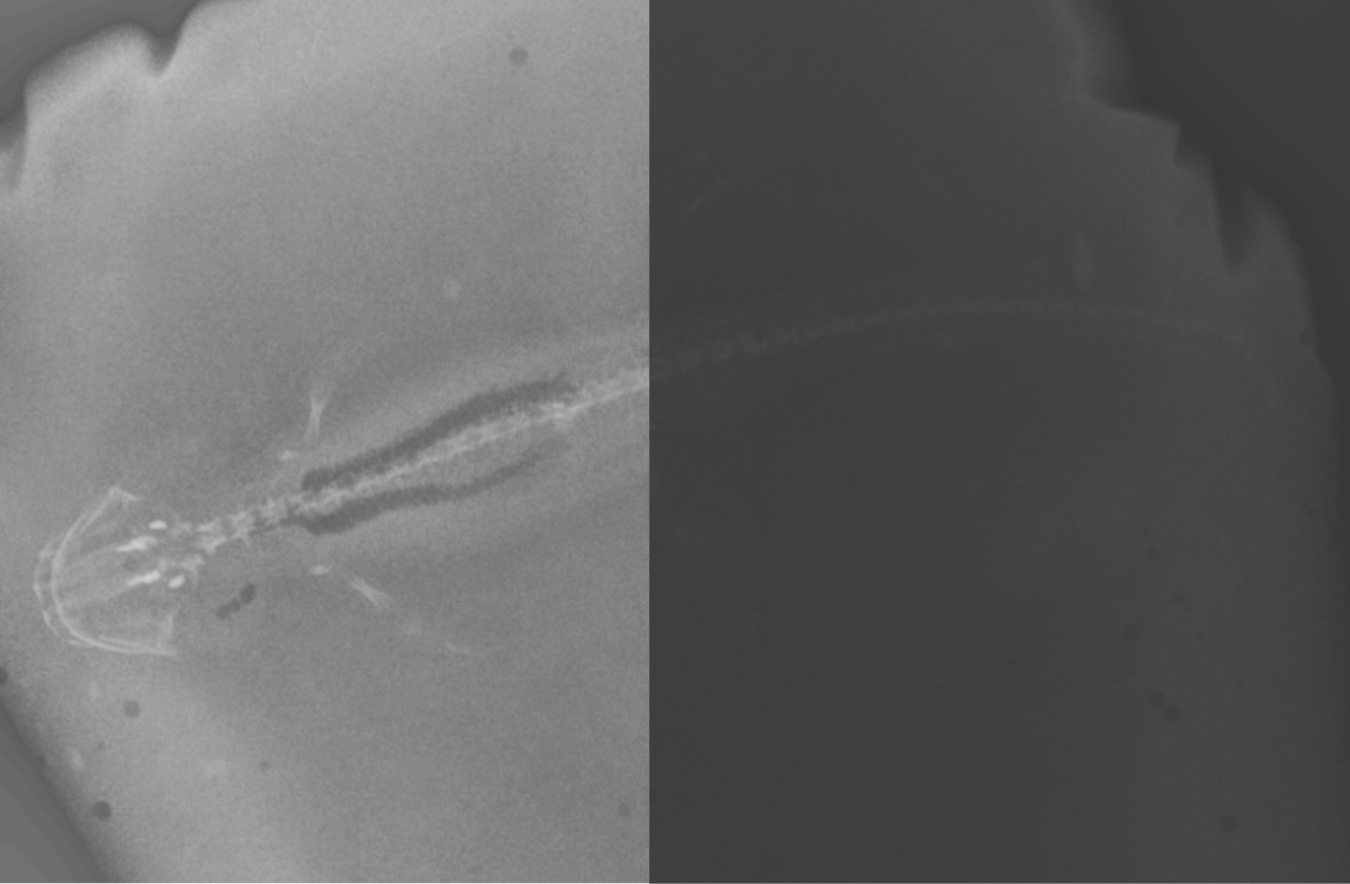
Radiograph of Parmesan, one of the Cheese Babes in the rescue’s care. On the right side is the original radiograph, where Parm’s bones are bare visible; on the left, even after we adjusted both brightness and contrast to enhance the image, some of the bones are so thin they remain barely visible.
©2026 Libertyland Axolotl Rescue
What this project includes
This project focuses on several of the Cheese Babes already in our care. Their clinical presentations give us a chance to examine how our approach to caring for axolotls with MBD holds up under real rescue conditions.
We’re using this phase to:
Observe how MBD presents across different rescue cases
Evaluate and refine supportive‑care protocols
Identify patterns that may inform future internal decisions
Understand what questions still need answers before considering a larger study
This work is intentionally slow, careful, and grounded in the day‑to‑day realities of rescue.
What this project does not include
To keep this project responsible and manageable, we want to be clear about its boundaries:
We are not enrolling outside axolotls
We are not currently conducting a treatment‑outcome study
We are not offering medical consultations
We are unable to diagnose MBD through messages or photos
This initial project is exploratory. Findings will guide internal decision‑making rather than produce conclusions about treatment outcomes.
How the NEHS grant supports this work
The NEHS grant helps cover part of the costs associated with this early‑phase project, including:
Supplies for supportive care
Diagnostics and imaging
Daily care needs for medically fragile animals
Time and resources required to track observations responsibly
This support allows us to continue building a welfare‑centered, evidence‑informed foundation for potential future work.
Looking ahead
As this phase progresses, we’ll share updates about what we’re learning and how those insights shape our internal practices. Whether this work eventually grows into a larger study will depend on what the animals themselves teach us.
For now, we’re deeply grateful to the New England Herpetological Society for investing in axolotl care, education, and the kind of slow, thoughtful work that makes a meaningful difference in animal welfare.
FAQ: Early‑phase MBD project
What is metabolic bone disease (MBD) in axolotls?
MBD is a complex condition involving bone demineralization, skeletal changes, and systemic stress. It can have multiple contributing factors, including nutrition, water chemistry, and long‑term husbandry.
Can I submit my axolotl for this project?
No. This project is limited to axolotls already in our care.
Can you diagnose my axolotl through photos or messages?
No. Diagnosis requires veterinary evaluation and imaging.
Will you publish the results?
This project is exploratory and designed to guide internal decision‑making. Whether future phases become publishable studies will depend on what we learn.
The New England Herpetological Society (NEHS) is a 501(c)(3) nonprofit dedicated to conserving reptiles and amphibians, advancing herpetological education, and fostering a welcoming community for enthusiasts across New England. Founded in 1972, NEHS supports conservation, responsible stewardship, public outreach, and small grants that advance research and education in herpetology.
NEHS Official Website: https://neherp.org
NEHS Facebook Page: https://www.facebook.com/NewEnglandHerp
NEHS YouTube Channel: https://www.youtube.com/@NewEnglandHerp
