At Home in a Habitat: Helping rescue axolotls find their forever homes
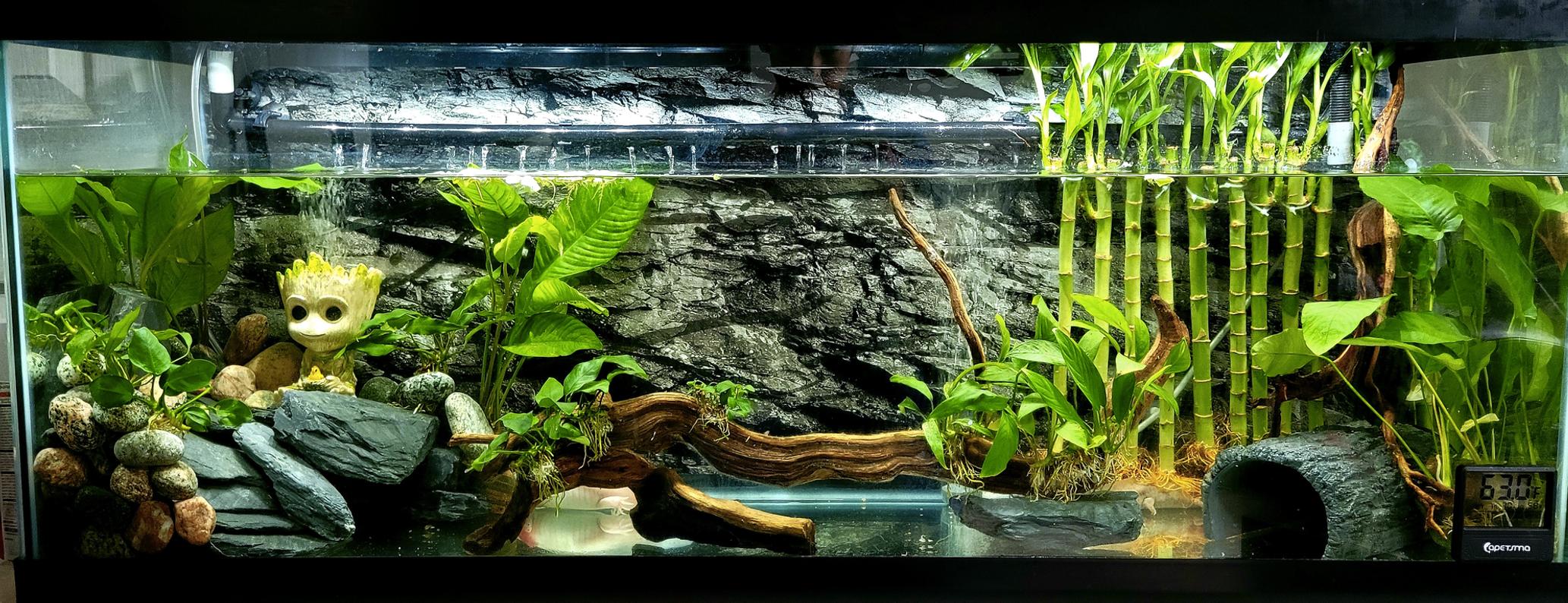
Image source: Axolotl Central
Amphibian Week is a celebration of the species that quietly hold ecosystems together. At Libertyland Axolotl Rescue, we see the importance of amphibians every day through the animals who come into our care. Their stories remind us that habitat isn’t just scenery—it’s survival. This week is the perfect moment to highlight how environment shapes health, how small changes make big differences, and how adopters can support these remarkable animals at home.
The Power of Habitat
Axolotls are entirely shaped by the water around them. Their skin‑based respiration, sensitivity to water chemistry, and regenerative abilities all depend on stable, cool, clean conditions. When an axolotl arrives at the rescue, the first thing we evaluate isn’t the animal—it’s the habitat they came from.
A healthy environment is more than a tank. It’s a life support system.
What a Healthy Axolotl Habitat Includes
A strong, species‑appropriate setup supports both physical health and natural behavior. Core elements include:
Cool, stable temperatures that mimic their native high‑altitude lakes
Low‑flow filtration to protect delicate gills
Multiple hides to reduce stress and support natural resting behavior
Safe substrate such as fine sand or bare bottom to prevent impaction
Consistent water testing for ammonia, nitrite, nitrate, and pH
These fundamentals are the backbone of every rehabilitation plan we build. (Learn more in our blog on setting up a proper axolotl habitat!)
Healing Through Environment
Every axolotl who enters LLAR brings a story shaped by their habitat. Some arrive with gill damage from high‑flow filters. Others come in with fungal infections from warm tanks. Many simply need time, space, and clean water to recover.
We see transformations every week:
Animals who begin eating again once moved into cooler, calmer water
Individuals whose gills regrow after weeks in stable, low‑stress setups
Long‑term surrenders who thrive once provided with proper hides and enrichment
Habitat isn’t cosmetic. It’s medical care.
How We Prepare Axolotls for Adoption
Before an axolotl is listed as available, they go through a structured process designed to ensure long‑term success:
Health assessment
Stabilization period with consistent monitoring
Feeding and behavior evaluation
Habitat matching based on adopter readiness and tank setup
Our goal is simple: every axolotl leaves healthier than they arrived and enters a home prepared to support them.
How You Can Support Amphibians at Home
Even if you’re not ready to adopt, you can make a difference:
Maintain healthy backyard wetlands
Avoid pesticide use
Support local conservation groups
Share accurate husbandry information
Encourage responsible pet ownership
Small actions ripple outward into healthier ecosystems.
Adopt, Foster, or Get Involved
We have several axolotls currently in care who will be ready for adoption soon. You can:
Support the rescue through donations or supplies
Your support helps us continue this work and provide safe, stable environments for the animals who need them most.
Amphibian Week reminds us that every habitat matters—from wetlands to living rooms. Thank you for celebrating with us and for helping us give these animals the safe, stable environments they deserve.
