Understanding the Consequences of an Uncycled Axolotl Tank
What does it mean for a tank to be “uncycled”?
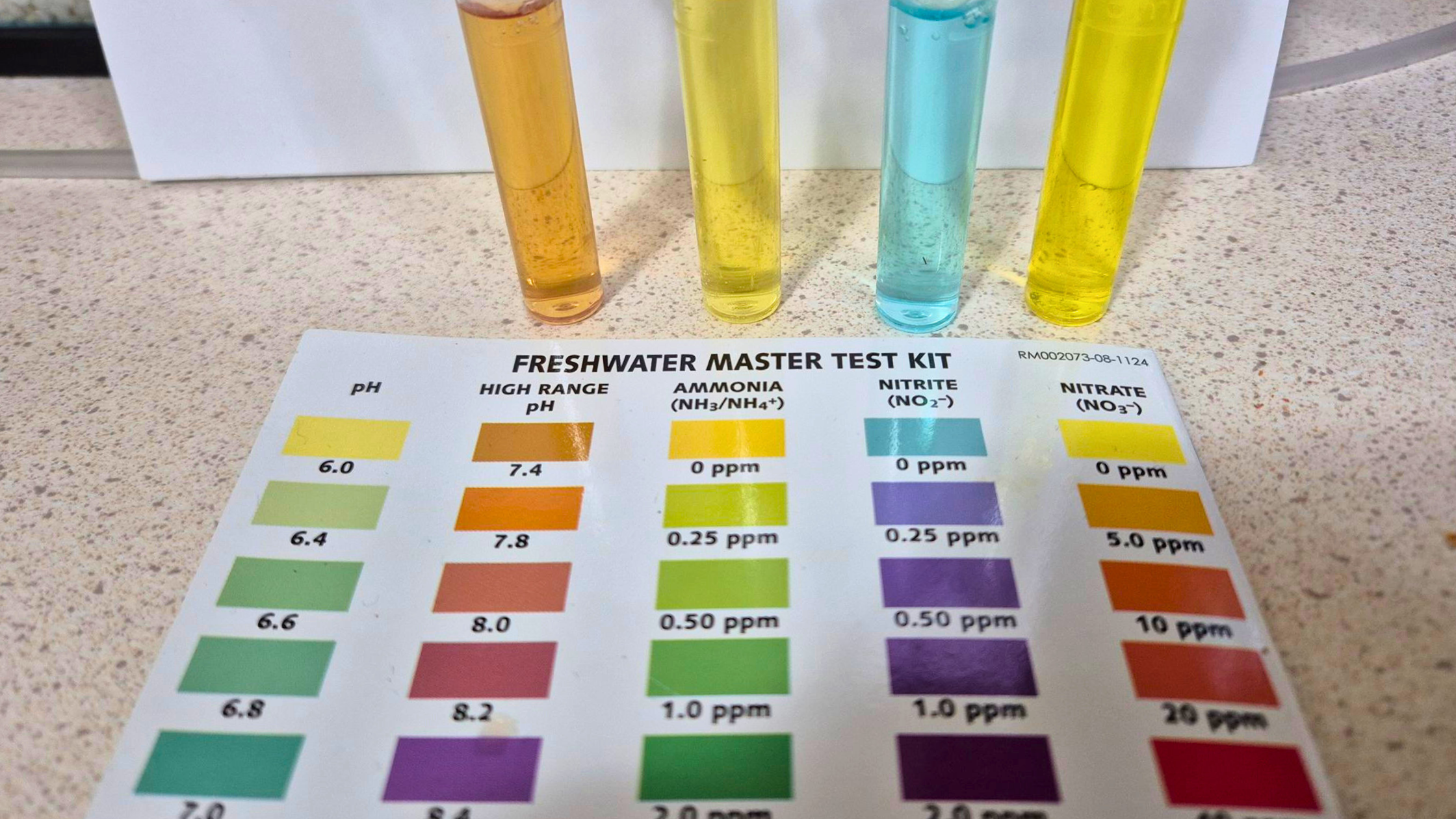
An uncycled tank is a new or recently reset aquarium that hasn’t yet developed the beneficial bacterial colonies needed to process waste. These bacteria form the foundation of the nitrogen cycle and are essential for keeping ammonia, nitrite, and nitrate at safe levels. If you’re new to this process, our guide on nitrifying bacteria offers a deeper look at how these colonies work.
What happens when an axolotl lives in an uncycled tank?
Without established bacteria, the waste an axolotl produces begins to accumulate immediately. Ammonia rises first, followed by nitrite, and in cases of a cycle crash, nitrate can spike as well. These compounds are toxic even at low levels, and prolonged exposure can lead to serious health complications.
We often see surrendered axolotls who have lived in uncycled tanks arrive with chemical burns, curled gills, peeling slime coats, or severe stress responses. Some do not survive the damage. Understanding how these compounds affect the body is the first step toward preventing these outcomes.
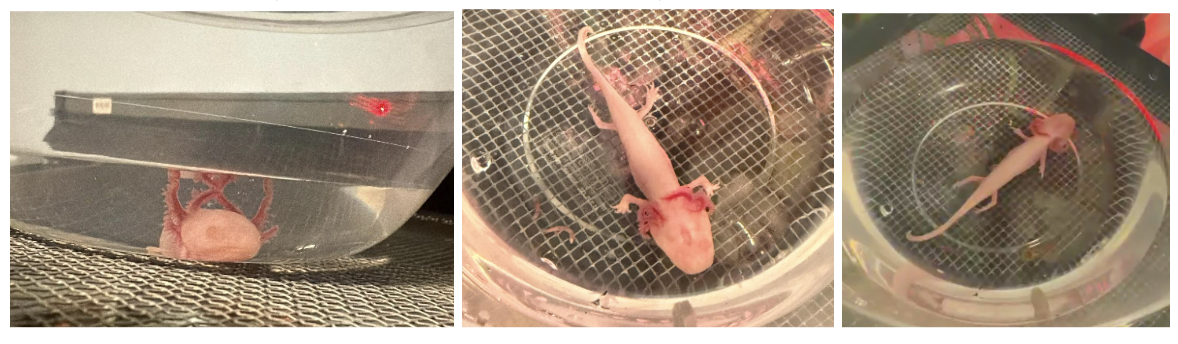
The images above illustrate the potential effects of cycling an aquarium with an axolotl (or any other living creature) in it; unfortunately, this axolotl passed shortly after these photos were taken.
Ammonia: What happens as levels rise?
Ammonia is the first compound to accumulate because it is produced directly from waste. Even small increases can cause discomfort and stress. Below is a breakdown of the various health consequences associated with variable ammonia levels:
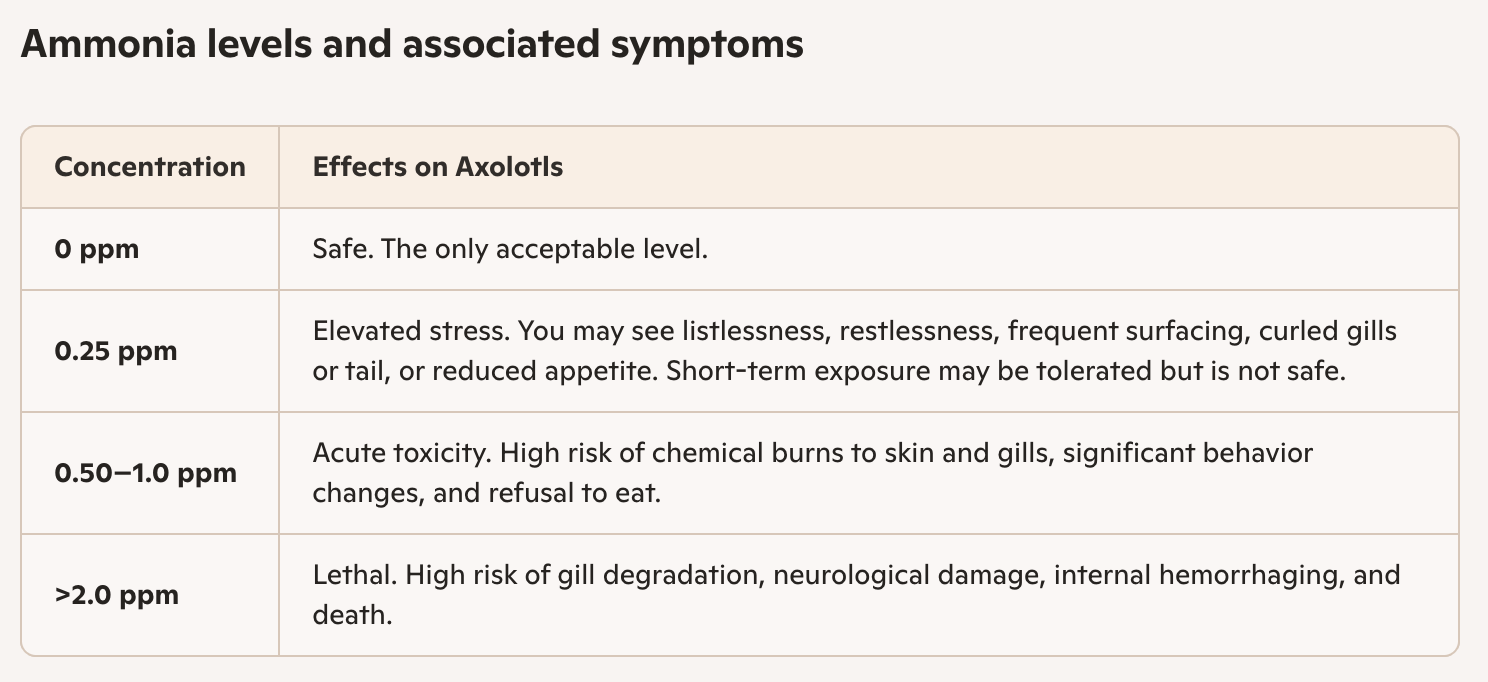
Comparison of increasing ammonia levels (ppm) and their correlating health concerns.
Nitrite: Why it’s especially dangerous
Nitrite is the most toxic compound in the nitrogen cycle. It interferes with oxygen transport in the blood, leading to methemoglobinemia. This condition can be fatal without rapid intervention. We discuss this process in more detail in our nitrite poisoning guide available here.
Below is a breakdown of the various health consequences associated with variable nitrite levels:
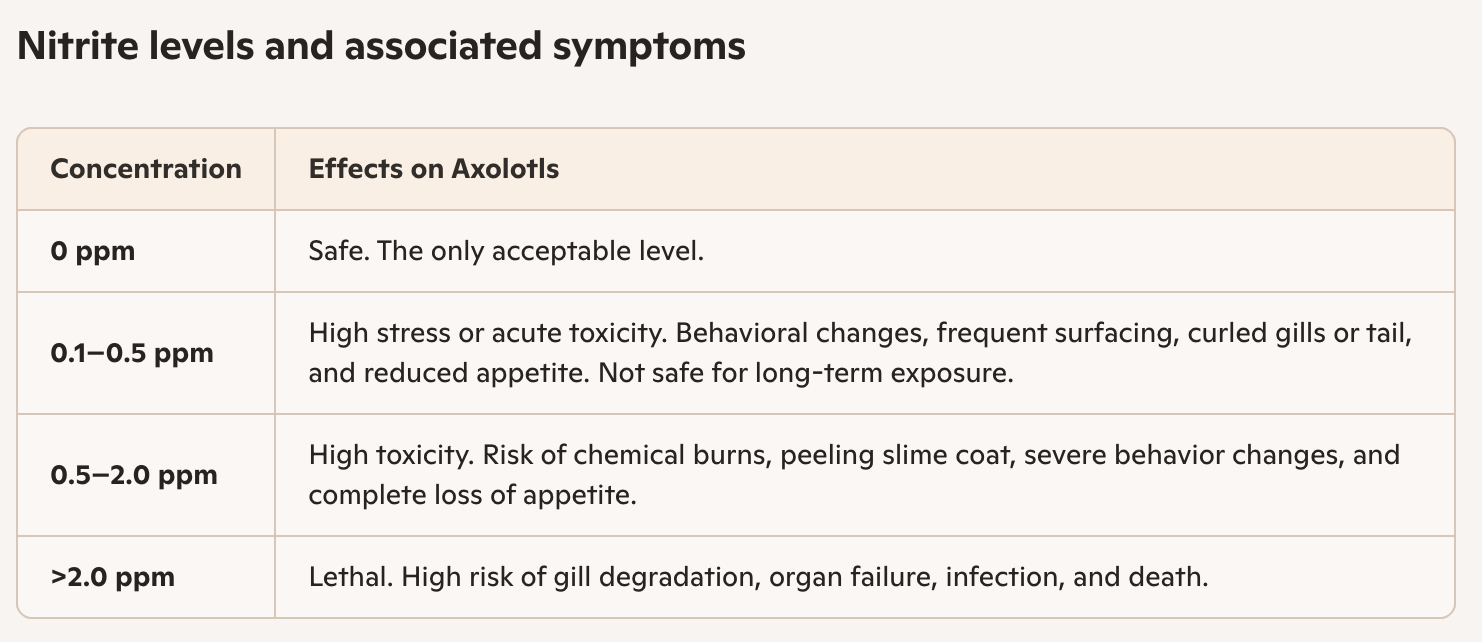
Comparison of increasing nitrite levels (ppm) and their correlating health concerns.
Nitrate: The final stage of the cycle
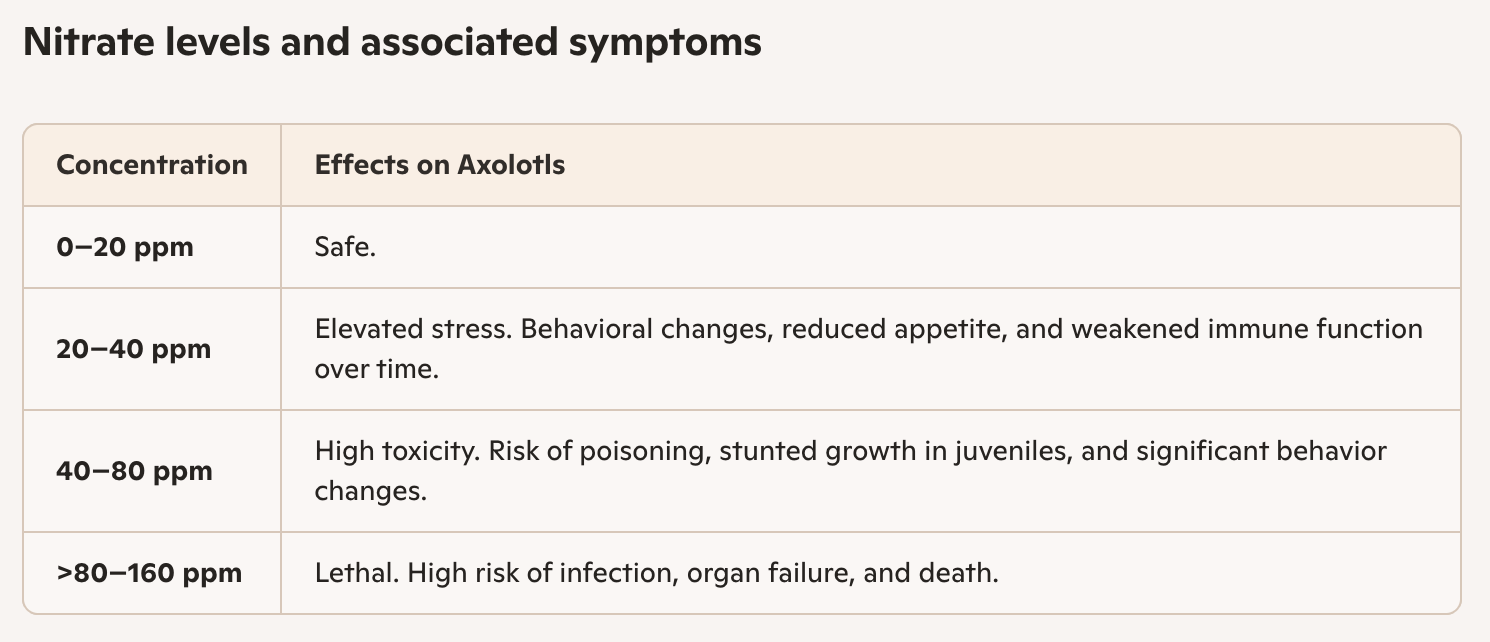
Nitrate is less immediately harmful than ammonia or nitrite, but high levels still cause stress and long‑term health decline. Like nitrite, nitrate can contribute to methemoglobinemia at elevated concentrations. Below is a breakdown of the various health consequences associated with variable nitrite levels.
How do I properly cycle my tank?
A safe, stable nitrogen cycle takes time. To establish a fishless cycle, you’ll need:
A manual ammonia source
An API Freshwater Master Test Kit
Optional beneficial bacteria additives
Our fishless cycling guide walks you through the process step by step.
Sources:
VIN - https://www.vin.com/apputil/content/defaultadv1.aspx?id=7259211&pid=14365&print=1
NCBI - https://www.ncbi.nlm.nih.gov/books/NBK592474/
Pet MD - https://www.petmd.com/reptile/species/axolotl-ambystoma-mexicanum
Journal of Limnology - https://www.jlimnol.it/jlimnol/article/view/jlimnol.2013.e46/1032
Caudata - https://www.caudata.org/cc/articles/cyclingEDK.shtml
