Axolotl Water Quality 101: A beginner’s guide to safe, stable water
Water quality is the foundation of axolotl health. Before choosing a tank size, a filter, or even a name, every new or future axolotl owner needs to understand the basics of what’s happening in the water—and how to keep it safe.
This guide breaks down the essentials in clear, beginner‑friendly language so you can build a stable, healthy environment from day one.
Why Water Quality Matters
Axolotls live their entire lives in water. The water becomes their air, their skin contact, their food environment, and their waste system.
When water quality is stable, axolotls thrive. When it is unstable, they decline quickly.
Good water quality helps prevent:
Stress
Appetite loss
Gill deterioration
Skin irritation
Ammonia burns
Long term organ damage
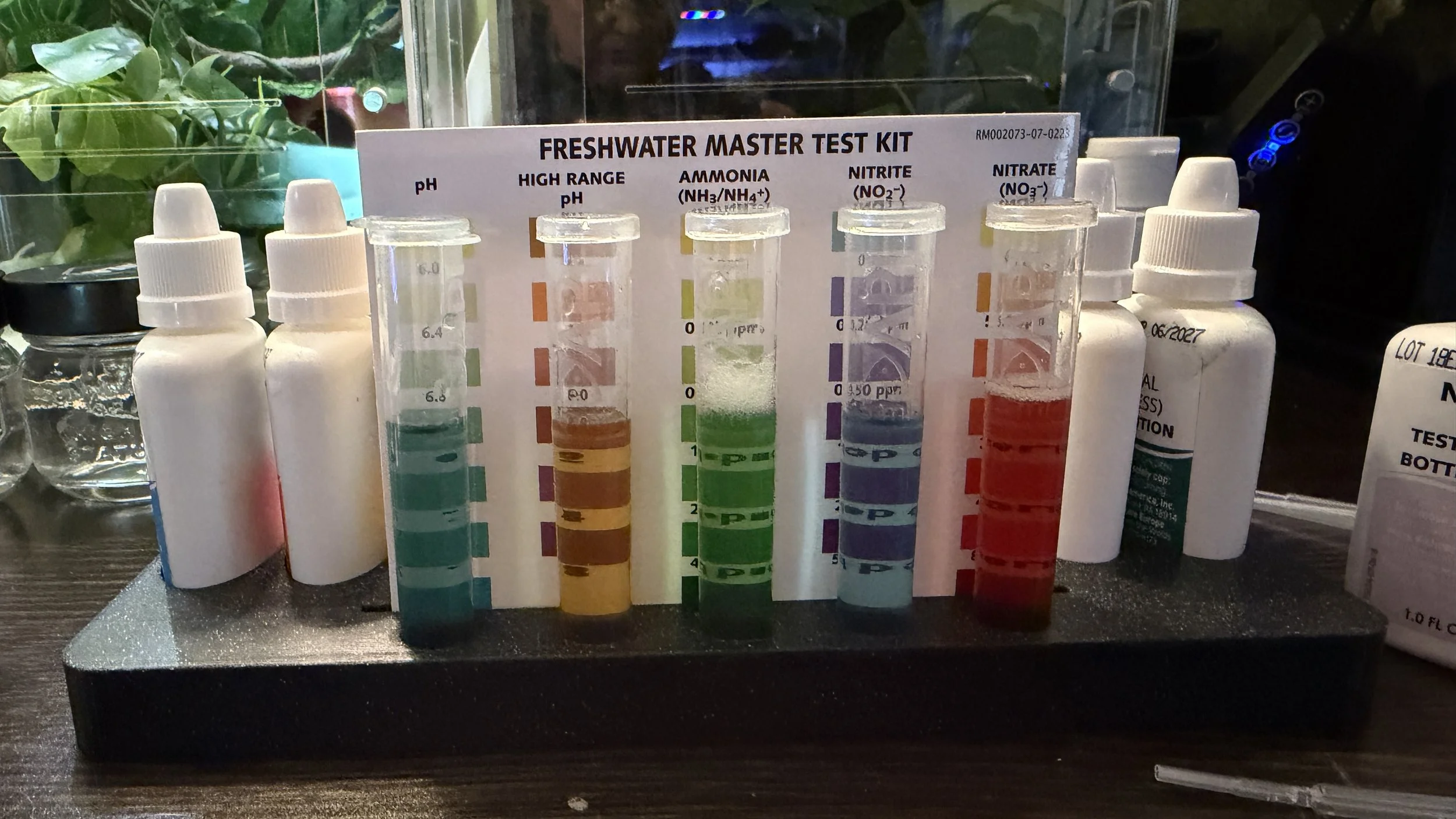
What You Need to Test Your Water
New axolotl owners can feel overwhelmed by water testing, but the tools are simple. You only need a few items to get started.
A liquid test kit for ammonia, nitrite, nitrate, and pH
A thermometer to monitor temperature
A siphon or gravel vacuum for water changes
A dechlorinator to make tap water safe
A bucket used only for aquarium water
Having these on hand makes testing easier and helps you respond quickly when something changes.
The Three Core Parameters
These are the numbers every axolotl keeper needs to know and test for regularly.
Ammonia (NH₃)
What it is: Waste from axolotls, leftover food, and decaying organics.
Why it matters: Even small amounts are toxic.
Safe level: 0 ppm
Nitrite (NO₂⁻)
What it is: A byproduct created when bacteria break down ammonia.
Why it matters: Also toxic at low levels.
Safe level: 0 ppm
Nitrate (NO₃⁻)
What it is: The final, less harmful byproduct of the nitrogen cycle.
Why it matters: Safe in low amounts, harmful when it builds up.
Safe range: 10 to 40 ppm
If ammonia or nitrite rise above zero, or if nitrate climbs too high, your axolotl feels it immediately.
Temperature Basics
Axolotls are cold water amphibians. Warm water speeds up their metabolism, reduces oxygen, increases stress, and over time contributes to weakened immune systems and chronic illness.
Ideal range:
60 to 65 degrees Fahrenheit
15 to 18 degrees Celsius
If your home runs warm, you may need a fan or a chiller to keep temperatures stable in a safe range.
pH Basics
Axolotls prefer stable, neutral leaning water.
Ideal range: 7.4 to 8.0
Consistency matters more than the exact number. Sudden swings are stressful.
How to Test Your Water
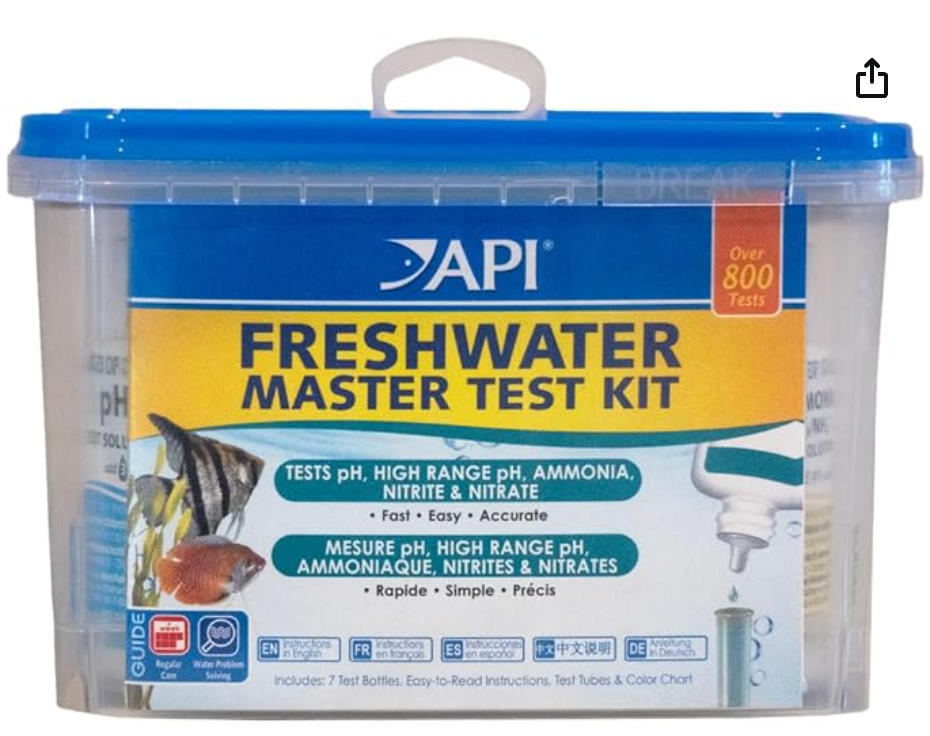
Use a liquid test kit like API’s Freshwater Master Test Kit, not strips. Liquid kits are more accurate and more reliable for cycling and troubleshooting.
We recommend testing:
Weekly in a stable tank
Daily during cycling
Anytime your axolotl shows stress signs
What to Do When Something Is Off
Here is the quick version:
Ammonia above zero: Tub your axolotl immediately and do a water change
Nitrite above zero: Tub your axolotl immediately and do a water change
Nitrate above forty: Tub your axolotl immediately and do a water change, then review your cleaning routine
pH swing: Check your source water and avoid sudden changes
Temperature too high: Cool the room, increase surface agitation with a fan, or use a chiller
For a deeper dive into cycling and troubleshooting, see our full Cycling Guide.
Common Beginner Mistakes
These are the issues we see most often in rescue. Avoiding them will make your tank more stable and your axolotl healthier.
Cycling with the axolotl in the tank
Using test strips instead of a liquid test kit
Chasing pH with chemicals
Overcleaning the filter and removing beneficial bacteria
Skipping water changes because the tank looks clean
Relying on a filter to fix water quality problems
Small changes in routine can prevent many of the emergencies we see.
Common Myths About Water Quality
“My tank looks clean, so the water must be fine.”
Not true. Toxins are invisible.
“I can cycle with my axolotl in the tank.”
This is unsafe and causes preventable harm.
“A bigger filter fixes bad water.”
Filters help, but they do not replace water changes or proper cycling.
Why Water Problems Happen
Understanding the cause of water quality issues helps you fix them with confidence. Common reasons for poor water quality include:
Overfeeding or leftover food
Over-cleaning the filter
New tank syndrome
Too many tank mates
Warm room temperatures
Inconsistent maintenance
Using untreated tap water
Most problems have simple solutions once you know what to look for.
The Most Important Takeaway
Water quality is not about perfection. It is about stability. Stable water keeps axolotls healthy, reduces stress, and prevents the vast majority of emergencies we see in rescue.
If you learn only one thing from this guide, let it be this: Test your water regularly and respond to what the numbers tell you.
Related Resources
“The Unsung Heroes of Aquatic Health: Nitrifying Bacteria” | Lessons Learned
”The Proper Way to Set Up an Axolotl Tank: A Step-by-Step Guide” | Lessons Learned
“Axolotl Tank Cycling Made Simple: How to Master the Nitrogen Cycle” | Lessons Learned
“#PROTIP: How to keep your cycle going while your axolotl is tubbed” | Lessons Learned
